
We have been doing selection projects for 20 years and have fine-tuned the methodology over the years to be as efficient and effective as possible. But that was before Claude. We have now changed how we do it, not what we do. Improvements include:
- Maintain a requirements library across multiple industries. In the past, when working in Excel for a specific client, we did not concern ourselves whether another RFP contained a similar or the same requirement. Now, we need to merge these requirements and group them logically or the requirements library will become too big and cumbersome to find requirements.
- Link RFPs to the requirements library when they contain identical requirements.
- Update the requirements library from business process reviews and previous RFPs identifying identical requirements, new requirements, and wording changes allowing us to grow the requirements library with each new project.
- Generate RFPs.
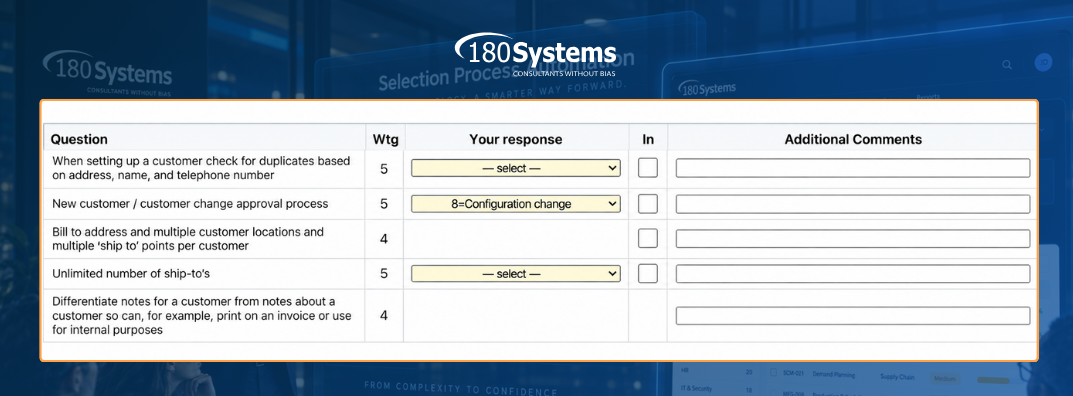
- Vendors respond to RFPs online (not spreadsheets) and the system defaults to their previous response for identical questions or requirements from previous responses to RFP. For example
- Generate analysis of vendor responses to RFPs
- Automated evaluation of the demonstration based on the script and what was demonstrated.
I, Michael Burns, was a software developer in a past life, but hung up my developer skates years ago. I am skating again and mostly loving it. We can’t wait to show you our new tools.