Spring is in the air. Windows open, playlists on, and suddenly you’re questioning why you own three versions of the same thing. It’s the season of fresh starts, and oddly enough, your ERP/CRM implementation could use one too.
If you’ve ever managed a system rollout, you know this truth: over time, even the best-planned implementations collect “stuff.” Extra fields. Duplicate workflows. Reports no one opens but everyone is afraid to delete. Before long, your shiny system starts feeling like that mysterious junk drawer in the kitchen.
So, let’s grab our metaphorical rubber gloves and do some spring cleaning, project manager style!
🌼Step 1: Declutter Your Requirements (Yes, Again)
Remember when every stakeholder said, “This is critical”?
Turns out, not everything is.
Spring is the perfect time to revisit your requirements backlog and ask:
- Is this still aligned with business goals?
- Has the process changed since we defined this?
- Are we solving a real problem, or just honoring an old request?
Pro tip: If no one has mentioned a feature in six months, it might be quietly begging to be retired.
🌼Step 2: Clean Up Your Data (The Real Dust Bunnies)
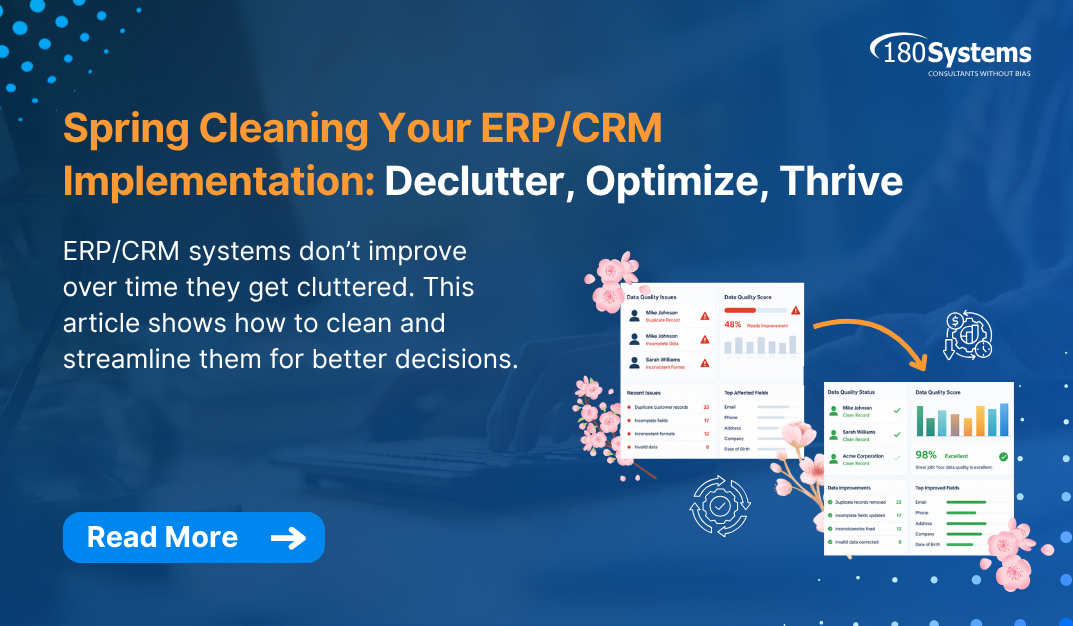
Nothing derails an ERP/CRM system faster than messy data. Duplicate records, outdated contacts, inconsistent formats, it’s like trying to organize a closet full of clothes that don’t fit.
Use this season to:
- Deduplicate customer/vendor records
- Archive inactive accounts
- Standardize naming conventions
- Validate key fields
Clean data isn’t glamorous, but it’s the difference between insights and confusion.
🌼Step 3: Simplify Workflows
At some point, someone said, “Let’s just add one more approval step.” And then it happened again. And again.
Now your process looks like a maze designed by overachievers.
Take a step back:
- Map current workflows
- Identify bottlenecks
- Remove unnecessary steps
- Automate where it actually adds value
Remember: the best workflows feel invisible.
🌼Step 4: Dust Off Your Documentation
Documentation is like that instruction manual you swear you’ll read someday. If it’s outdated, no one trusts it. If no one trusts it, no one uses it.
Time to:
- Update process guides
- Refresh training materials
- Align documentation with current system behavior
Bonus: this makes onboarding new users way less painful.
🌼Step 5: Re-Engage Your Stakeholders
Spring cleaning isn’t just about things, it’s about people too.
Check in with your stakeholders:
- Are their needs being met?
- Are they using the system as intended?
- What frustrations have quietly built up?
You might uncover small fixes that create big wins.
🌼Step 6: Let Go of “We’ve Always Done It This Way”
This is the hardest part.
ERP/CRM projects often inherit legacy habits disguised as “requirements.” But spring is about renewal, not nostalgia.
Challenge assumptions. Reimagine processes. Encourage teams to embrace better ways of working.
Because sometimes the biggest upgrade isn’t the system, it’s the mindset.
🌼Final Thoughts: A Fresh System, A Fresh Start
Spring cleaning your ERP/CRM implementation isn’t about perfection. It’s about clarity, efficiency, and making sure your system actually supports the business, not slows it down.
So open the windows, clear the clutter, and give your project the refresh it deserves.
Who knows? You might even start enjoying those status meetings again.