Epicor Insights 2026 in Nashville was a great reminder that ERP is not just about software, workflows, dashboards, and project plans, although, as a Project Manager, I do believe a well-maintained project plan deserves its own standing ovation.
Between the sessions, conversations, product updates, and Nashville energy, Insights gave me a chance to step away from the day-to-day world of timelines, trackers, and “just following up on this action item” emails and look at the bigger picture of where ERP is headed.
And spoiler alert: the future is exciting.
Also, it still needs clean data.

ERP Is Getting Smarter, but Data Still Refuses to Clean Itself
A major theme at Insights was innovation. Epicor continues to move forward with cloud capabilities, automation, analytics, AI, and tools designed to make everyday work easier for users.
That is exciting because ERP systems are no longer just places where transactions go to live forever. They are becoming smarter platforms that help businesses make faster decisions, improve visibility, and reduce manual work.
But here is my very project manager take: even the smartest system still needs a solid foundation.
You can have all the AI, automation, and dashboards in the world, but if your master data is messy, your processes are unclear, or your users are not trained, the system is going to give you exactly what you gave it – chaos, but faster.
In other words: AI may be the future, but clean master data is still the main character.
The Demo Always Looks Easy
One of the best parts of conferences like Epicor Insights is watching the demos. Everything works beautifully. The clicks are smooth. The reports load perfectly. The workflow makes sense. No one forgets their password.
It is magical.
Then everyone gets back to the office and remembers that real ERP projects involve legacy data, competing priorities, custom processes, and at least one spreadsheet named “FINAL_FINAL_REVISED_v7.”
That is where the real work begins.
As a Project Manager at 180 Systems, my job is to help clients move from “that demo looked amazing” to “here is the practical plan to actually make this work for our business.” That means identifying prerequisites, assigning owners, tracking decisions, managing risks, and keeping everyone aligned.
Basically, I help turn conference inspiration into something slightly less chaotic and much more actionable.
Testing: The Part Everyone Underestimates Until It Starts
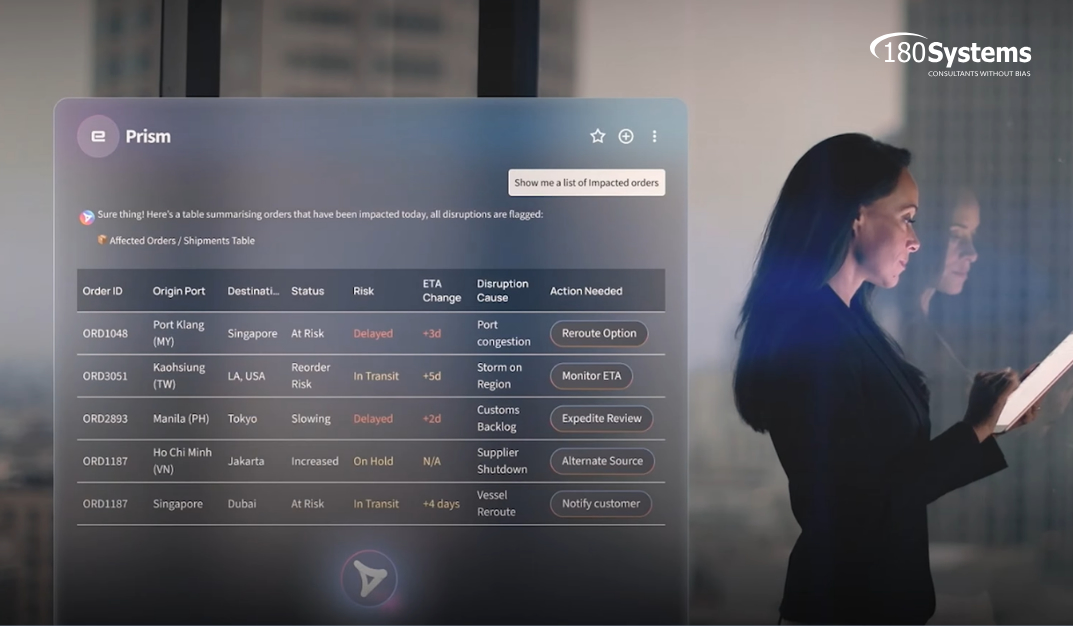
Testing may not be the most glamorous part of an ERP project, but it is one of the most important.
It is also where optimism goes to meet reality.
In theory, testing is simple: confirm the system supports the business process.
In practice, testing often sounds like:
- “Wait, who owns this step?”
- “Why is this posting there?”
- “Did we migrate that field?”
- “Is this a gap or did we just click the wrong thing?”
- “Can someone ask Finance?”
- “Can someone ask Ops?”
- “Can someone ask the person who is on vacation?”
This is exactly why testing needs structure. Good testing is not just clicking around and hoping for the best. It means using real business scenarios, documenting outcomes, identifying issues early, and making sure users feel confident before go-live.
Because go-live is not the ideal time to discover that no one tested the process everyone uses daily.
That is what we in project management call “character development.”
User Adoption Starts Before the Panic Phase
A successful ERP project is not just about flipping the switch and declaring victory. It is about whether people can actually use the system after go-live without needing three monitors, a printed workaround, and emotional support snacks.
User adoption starts long before go-live. It starts when users understand what is changing, why it matters, and how they are involved in shaping the final solution.
At 180 Systems, we help clients think through the practical side of adoption: training, communication, testing, issue management, business ownership, and support readiness.
Because no one wants go-live day to feel like being handed the keys to a spaceship with a sticky note that says, “Good luck.”
What I’m Taking Back to My Role at 180 Systems
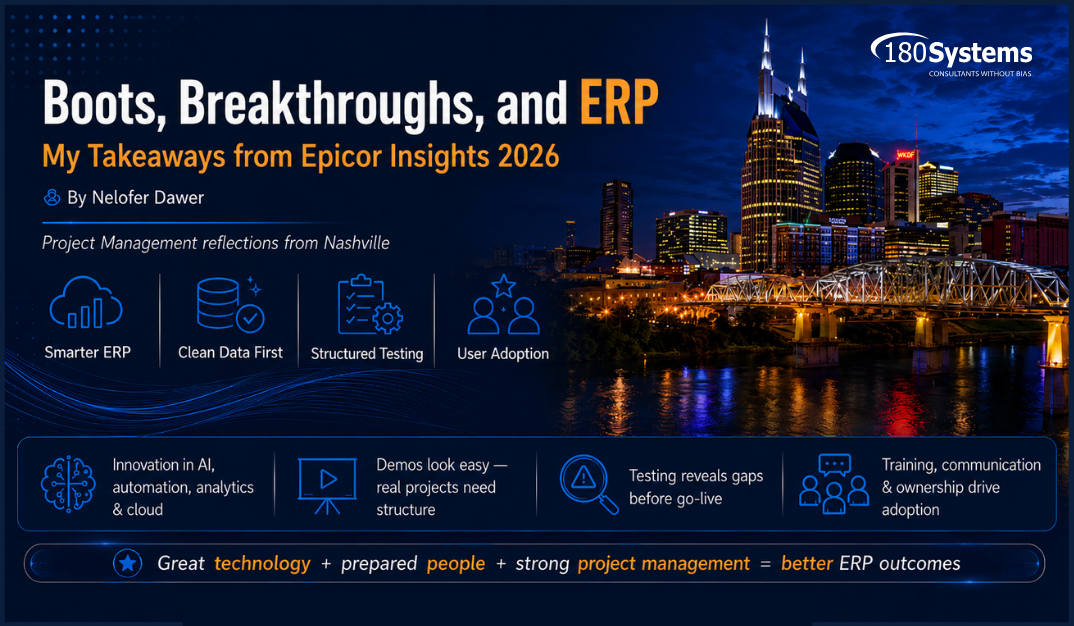
Epicor Insights reminded me that ERP projects need both excitement and structure.
The excitement comes from seeing what is possible: smarter tools, better reporting, improved workflows, automation, AI, and more connected systems.
The structure comes from what happens next: planning, prioritizing, documenting, testing, training, and keeping everyone moving in the same direction.
As a Project Manager, I live in the space between “this is a great idea” and “who owns this by Friday?”
And honestly, that is where a lot of the real value happens.
My biggest takeaways for future ERP projects are:
- Clear project plans matter.
- Data readiness matters.
- Testing matters.
- Training matters.
- Communication really matters.
And yes, action item owners matter very, very much.
Final Thoughts
Epicor Insights 2026 was energizing, informative, and a great opportunity to see where ERP technology is heading. It was also a good reminder that while ERP systems are getting smarter, projects still depend on people, preparation, and follow-through.
Technology can create amazing possibilities, but strong project management helps turn those possibilities into real business outcomes.
So yes, I came back excited about Epicor’s direction. I also came back with a renewed appreciation for the less glamorous parts of ERP success: the project plans, trackers, testing scripts, meeting notes, risk logs, and action items that keep everything moving forward.
Because behind every successful ERP project is great technology, a committed team, and at least one Project Manager asking, “Can we confirm who owns this?”
[/vc_column_text][/vc_column][/vc_row]