
Project success is still largely defined by delivery – on time, on budget, and in scope. That standard hasn’t changed, but it is no longer enough on its own. Organizations expect projects to produce measurable outcomes, not just completed work.
This is where business acumen matters. It’s the ability to understand how a project connects to the broader business – financial impact, operational improvements, and strategic priorities then make decisions with that context in mind.
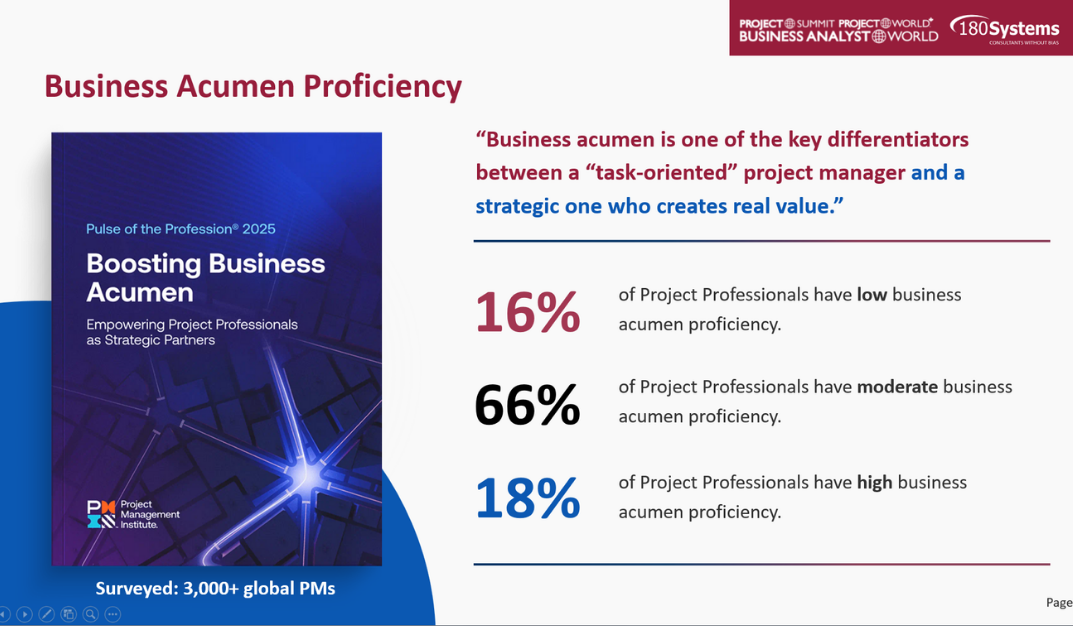
Most project managers operate somewhere in the middle. Data shows that many have moderate business acumen, with fewer demonstrating strong capability. The difference is visible in how projects are managed and how success is measured.
Project managers with strong business acumen look beyond standard delivery metrics. They consider factors like customer outcomes, compliance, net promoter score, operational efficiency, and alignment to business strategy. This shifts the conversation during the project. Trade-offs are evaluated against impact, not just timelines. Scope is challenged when it does not support the desired outcome.
This is the distinction between managing a project and leading one. Managing focuses on execution – tracking tasks, maintaining the plan, and reporting status. Leadership focuses on outcomes – questioning assumptions, pushing for clarity, and driving decisions that improve results.
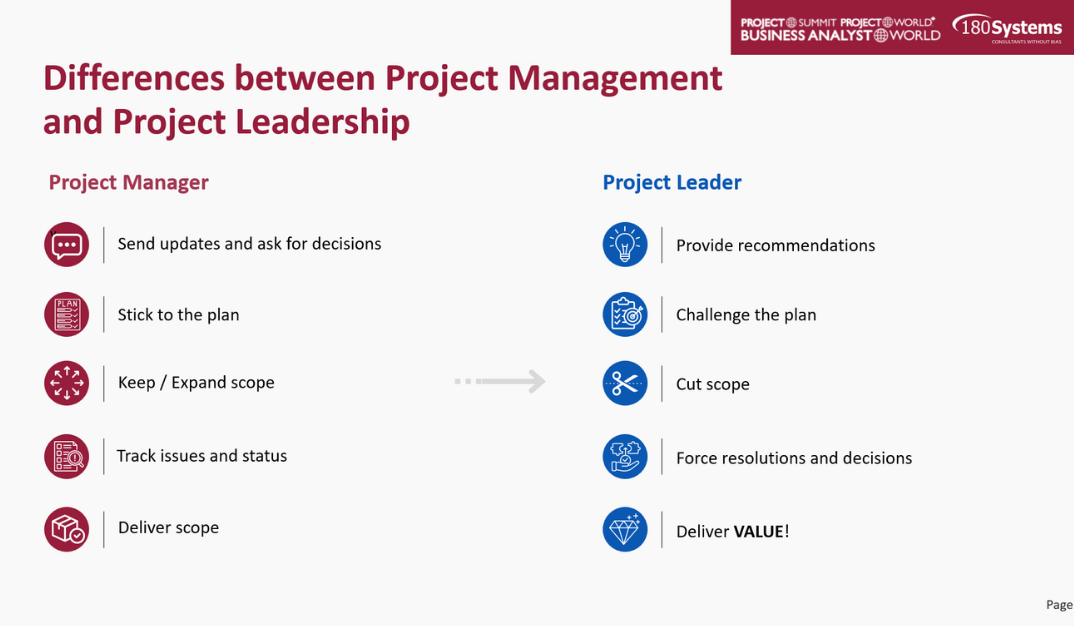
The takeaway is straightforward. Delivering a project is not the goal. Delivering value is. Strong project managers ensure the work gets done. Stronger ones ensure the work matters.