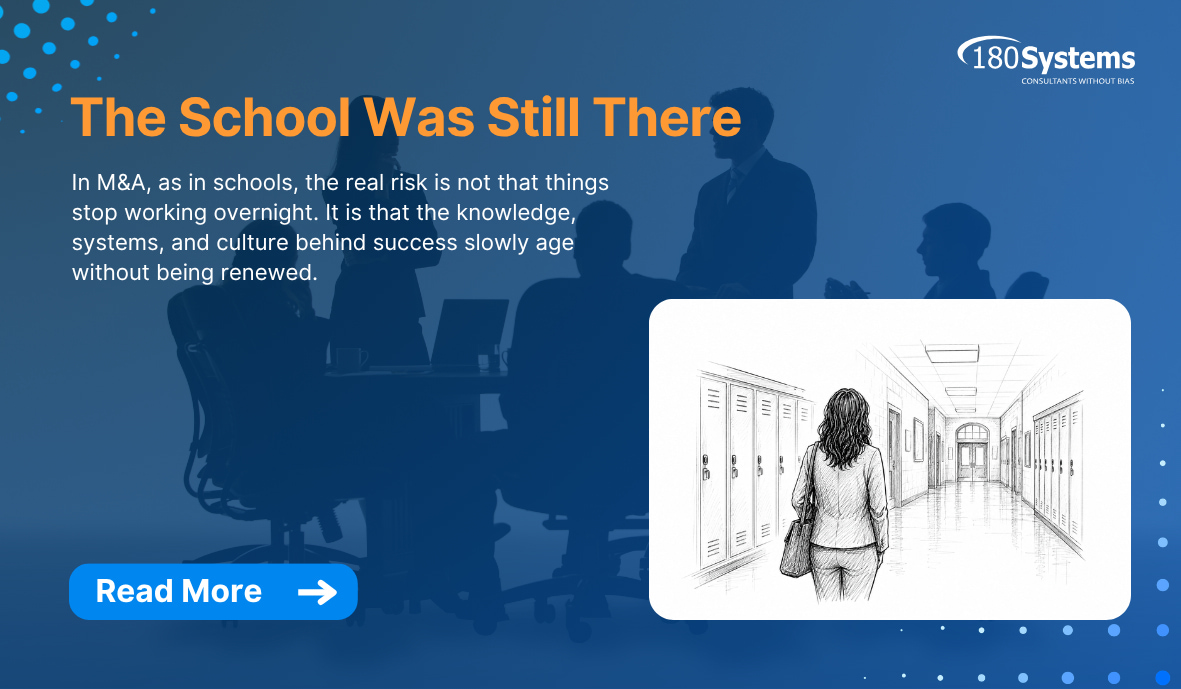
A few days ago, I returned to my old high school to speak at the retirement celebration of one of my teachers. I had not walked those halls in thirty years.
As soon as I stepped through the front doors, I felt something I was not expecting. It was as though time had folded in on itself. For a moment I was no longer a consultant, a doctoral candidate, a wife, or a mother. I was as early teen again, trying to figure out where I fit in the world.
The school looked almost exactly as I remembered it. The hallways were the same, the gym still felt enormous. The auditorium was every bit as impressive as it had seemed when I was a teenager. I found myself smiling at memories I had not thought about in decades.
Then I saw something that stopped me completely. My picture was sitting in a display case from 1996. There I was in band class, frozen in time. Somehow, while the rest of life had continued moving forward, a small piece of me had remained in that school all these years. Standing there looking at that picture was strangely emotional. It reminded me how much of who I am today was shaped inside those walls.
As I wandered through the building, however, I started noticing things I never would have paid attention to as a teenager. The bathroom stalls no longer matched. Some of the mirrors were cracked. The toilets looked tired. The taps barely produced enough water to wash your hands. Nothing was completely broken, but there were signs everywhere that the building had been carrying the weight of time for a very long time.
What struck me most was that the school was still doing exactly what it was built to do.
Students were learning, teachers were teaching, the music rooms were full. The school was alive.
Yet there was also a feeling that something needed attention. Not because the mission had changed, but because the systems supporting that mission had slowly aged while everyone was busy focusing on the work itself. The retirement celebration amplified that feeling.
Many of the teachers who shaped my experience had already retired or were preparing to. These were the people who carried the culture of the school. They knew its history and they knew what worked. They knew why certain traditions existed and how to bring people together around a common purpose.
The next generation of teachers was not doing anything wrong. They were working hard and deeply committed to their students. But like most professionals, they were focused on the demands directly in front of them. Their classrooms, their departments, their responsibilities.
Standing there, I found myself wondering what happens to an institution when the people who carry its memory begin to leave. That question followed me home because it is remarkably similar to what I have observed in acquisitions.
One of the assumptions we often make in M&A is that organizations naturally get better at integration with experience. If a company has completed ten acquisitions, surely it must be better than a company that has completed two. But that is not always what happens.

Sometimes organizations accumulate experience without building capability. The people who led previous integrations remember what worked and what failed. They know where decisions became bottlenecks. They know which assumptions proved unrealistic. They know which leaders stepped up and which governance structures slowed everything down. The challenge is that those lessons often remain with the people rather than becoming part of the organization itself.
Over time, experienced leaders leave. New leaders arrive. Playbooks become outdated. Processes that once worked well become increasingly dependent on individual effort rather than institutional knowledge. From the outside, everything still appears to function. The integrations still happen. The meetings still occur. The reporting still gets produced. The organization is still standing.
But beneath the surface, some of the systems that once supported success have quietly begun to deteriorate. That was the feeling I had walking through my old high school.
Not disappointment, not criticism, something closer to longing.
A longing to see a place that had given so much to so many people receive the investment, renewal, and attention it deserved. A longing to see fresh energy brought into a community that still had tremendous potential. A longing to preserve what made it special while ensuring it remained strong for the next generation. The more I thought about it, the more I realized that the same feeling applies to many organizations.
They are filled with talented people that have accomplished remarkable things. They carry years of experience and hard-earned lessons. And, yet experience alone is not enough. Institutions survive because they renew themselves, they capture knowledge. They invest in their systems and create excitement about the future while honoring the past.
Otherwise, they slowly become dependent on memories of what once worked instead of building the capabilities needed for what comes next.
My old high school is still standing.
The question that stayed with me long after I left is whether standing is enough.