180 Systems_What an ERP Implementation Means for Employees

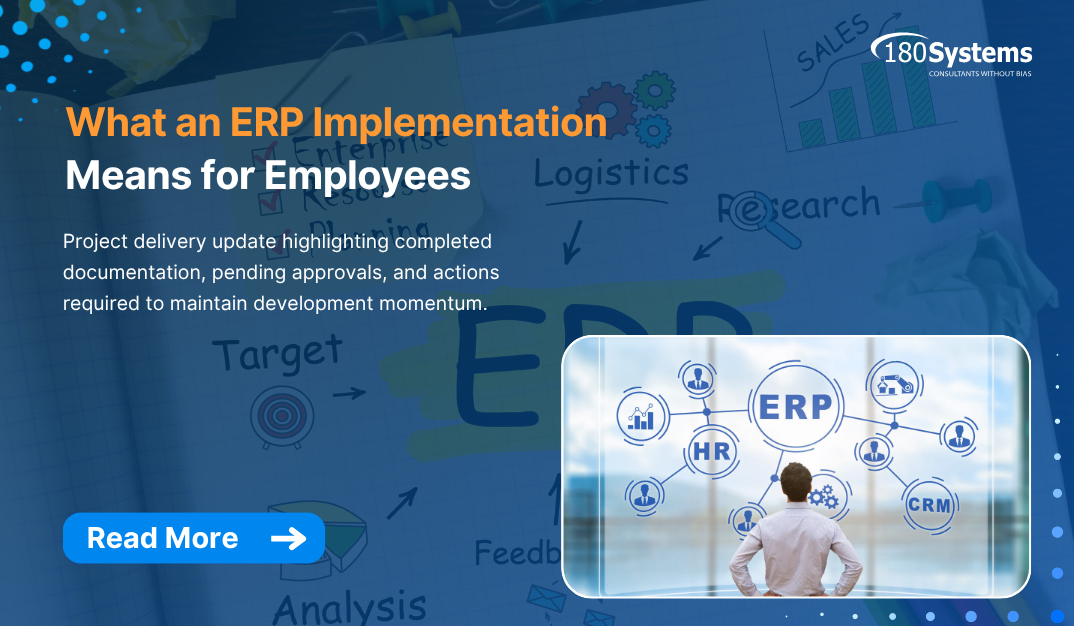
What an ERP Implementation Means for Employees

When employees hear about a new ERP system, the first concern is often learning new software. While training is an important part of the journey, ERP implementations are really about improving how work gets done across the organization. The goal is not simply to replace existing technology, but to give employees better tools, better information, and more time to focus on higher-value work. Many organizations rely on spreadsheets, manual reconciliations, duplicate data entry, and disconnected systems to operate their business. Over time, these workarounds become part of daily operations and consume significant time and effort. As routine and manual activities […]

Read More…

For the Love of Scheduling, and Other Affairs in Field Service

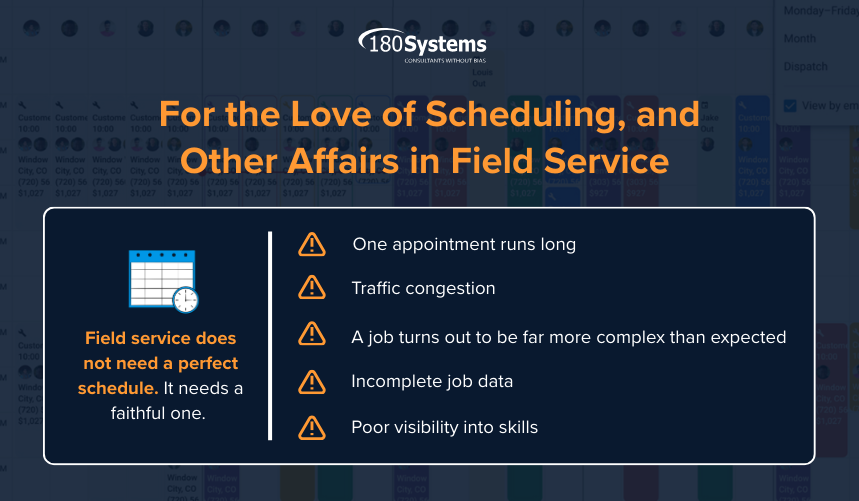
For the Love of Scheduling, and Other Affairs in Field Service

Scheduling in field service always starts with good intentions. Somewhere, usually the night before, a clean, logical schedule exists. It has neat time slots, sensible travel paths, and a comforting sense of order. Then the day begins, and scheduling immediately reminds everyone that it has a personality of its own. On paper, scheduling looks like a math problem. In real life, it behaves more like a relationship. It is emotional. It is unpredictable. And it has a habit of going off-plan the moment you stop paying attention. The first misunderstanding usually happens around availability. A technician appears free on the […]

Read More…

180Systems_Boots, Breakthroughs, and ERP My Takeaways from Epicor Insights 2026 (1) (1)

Boots, Breakthroughs, and ERP: My Takeaways from Epicor Insights 2026

Epicor Insights 2026 in Nashville was a great reminder that ERP is not just about software, workflows, dashboards, and project plans, although, as a Project Manager, I do believe a well-maintained project plan deserves its own standing ovation. Between the sessions, conversations, product updates, and Nashville energy, Insights gave me a chance to step away from the day-to-day world of timelines, trackers, and “just following up on this action item” emails and look at the bigger picture of where ERP is headed. And spoiler alert: the future is exciting. Also, it still needs clean data. ERP Is Getting Smarter, but […]

Read More…

M&A Without the Migraine (1)

M&A Without the Migraine

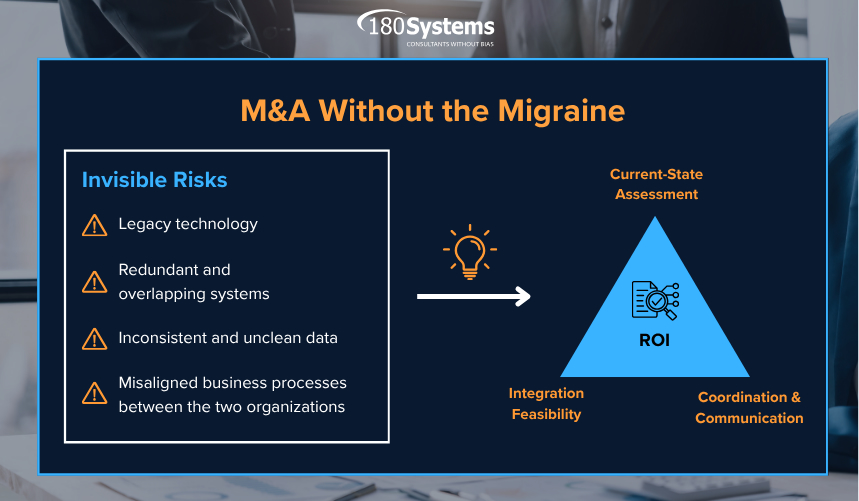
Everyone loves a merger until someone opens the shared drive. Suddenly, the spreadsheets do not match, half the files are named “final_v7,” and the CFO is wondering why there are three versions of the customer database. The headlines make mergers and acquisitions sound glamorous, but anyone who has lived through one knows it is more caffeine than champagne. The part that rarely makes the press release is the operational reality. The systems, data, and processes that quietly keep businesses running do not always get along. Integration becomes the invisible risk that can turn an impressive deal into a slow-motion headache. […]

Read More…

180 Systems _ Top 10 ERP Systems

Top 10 ERP Systems

There are many top 10 lists of ERP systems available but be careful what you ask or wish for. These lists are all biased in some way as they can’t possibly include the top 10 systems that are applicable to a specific organization. The top 10 systems should vary by industry, company size and geography. Industry Your needs will vary widely by industry. But even then, there are big differences for a particular industry such as manufacturing . For example, here is a list of different manufacturing types suggested by ChatGPT. Each of these will have different ERP requirements. Company […]

Read More…

180 Systems-Problems with ERP systems

Problems with ERP systems

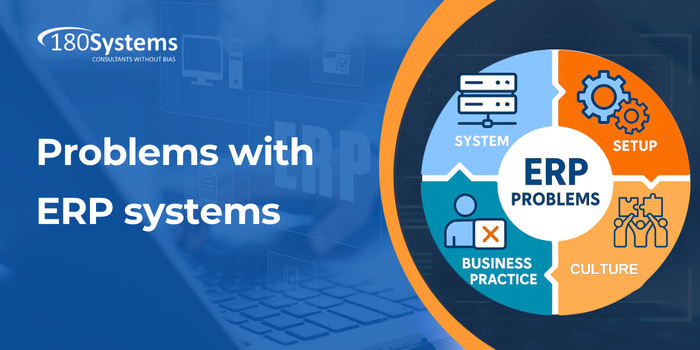
I read an interesting article about problems with ERP Systems on May 28, 2025 which you can check out by clicking here. The article identifies the following 4 problems with ERP: System – system is missing functionality needed Setup – system ok but not setup properly Incomplete – system ok but not using it Business Practice – system ok but not using it well It’s important to classify the problem, as the solution is not always a new system. We take a similar approach when we do our business process reviews, where we interview employees to describe the business process […]

Read More…

180 Systems-ERP Software Sunset_ Navigating Dynamics GP End of Life

ERP Software Sunset: Navigating Dynamics GP End of Life

Unfortunately, when it comes to ERP sunsets, they are not as beautiful as the sunsets you might see over a lake at the cottage like the one above. The big sunset story comes from Microsoft that announced in September 2024 that it will end support for Dynamics Great Plains (Dynamics GP) on September 30, 2029. Security patches will be available until April 30, 2031. It’s not time to panic if you have Dynamics GP, but it is time to consider your options. The truth is that sooner or later you will need to move to another solution. Those of us […]

Read More…

Migrating your ERP Systems to the Cloud (2)

Migrating your ERP on-premise software to the cloud

There is a big push by the ERP vendors to convince their clients to migrate their on-premise software to the cloud. The vendors have selfish reasons to promote the cloud, but they also give compelling reasons to their clients to do it. There is resistance if everything now is mostly working and it’s going to cost a lot to do it. This article is not going to try and convince you to go to the cloud as there are more than enough reasons already in the public domain. From our perspective, it’s only a matter of time before you jump […]

Read More…

180 Systems - ERP Implementation Tips and Tráp

ERP Implementation Tips and Traps

We will be providing a series of articles with tips and traps to avoid based on ourexperience.Vendors have a defined process to implement their systems that could includecompleting a form to define your needs (a discovery process). The problem is thatthe sales team has not done a proper hand-over to the implementation team. Ineffect, you are starting all over again, which is a waste of time. But that’s not thebiggest problem with this approach. The biggest problem is that the implementer isnot aware of your specific requirements and may not address them until well intothe implementation process when they find […]

Read More…