[…]
[…]
My eight-year-old son found a chicken outside and brought her home. Not from a farm, not from a neighbour we knew, not from any situation where a chicken should reasonably be collected and relocated by a child. She was just outside, wandering with confidence, and apparently that was enough to begin the acquisition process. By the time I understood what was happening, the chicken had a name. Ginger. Water had been offered. Food was being discussed. My son had already moved from discovery to emotional ownership in about seven minutes, which, frankly, is faster than most deal teams move from […]
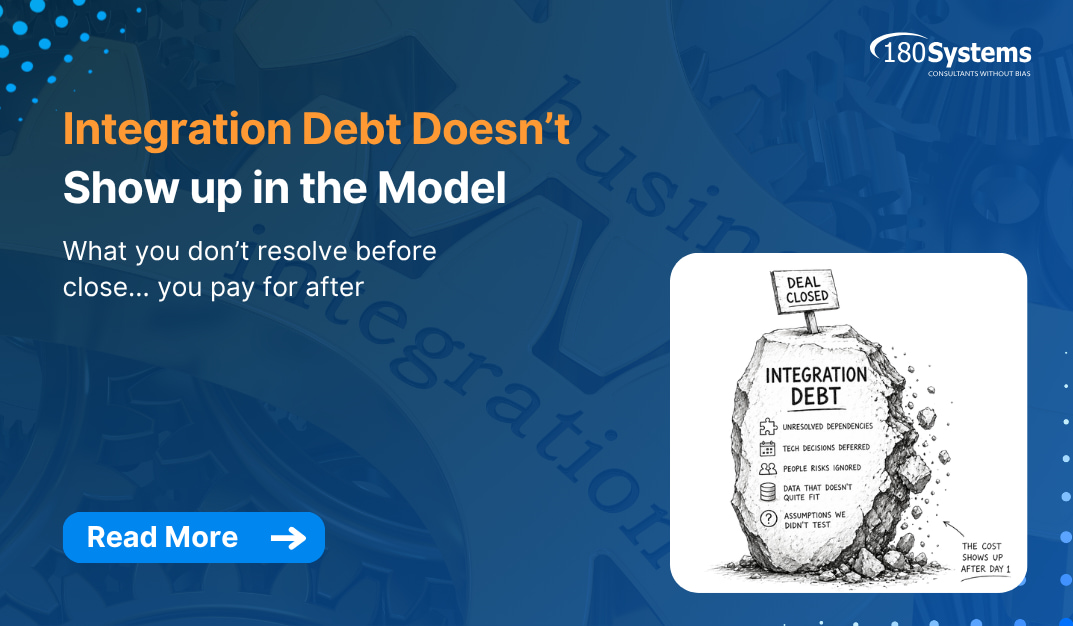
Everyone talks about technical debt, but almost no one talks about integration debt. Which is interesting, because if you have been through a few deals, you have definitely paid for it. Just not when you expected to. Integration debt is what you carry into Day 1 because you did not resolve it before close. It shows up as unvalidated assumptions, dependencies that were “understood” but never fully mapped, technology decisions that got pushed, and people risks that felt just uncomfortable enough to avoid. None of it feels critical in the moment. The deal is moving, the model holds, and nobody […]
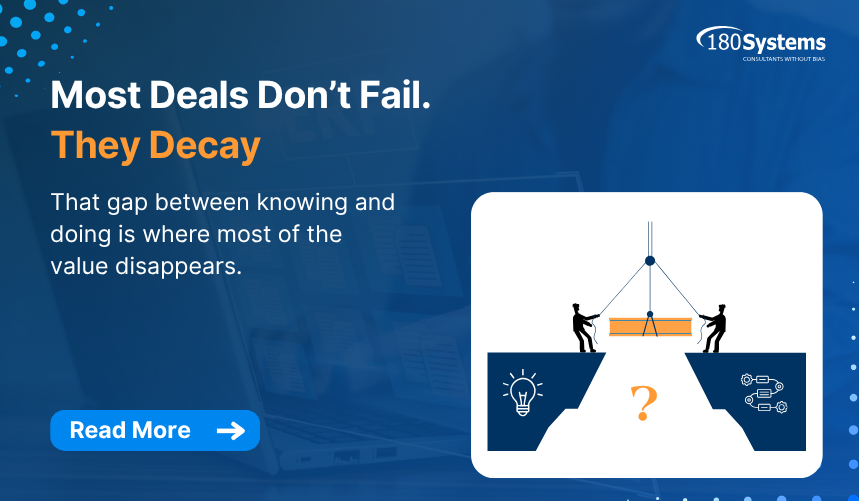
I’ve been living in two worlds lately. The first is research. Clean, structured, logical. It tells me exactly what organizations should be doing in integration. The second is operators. People who’ve done 30, 50, 150+ deals. Here’s the interesting part: They agree. Start integration early they say, align leadership, build the playbooks and don’t forget to capture lessons learned. Make sure to treat integration like a capability. So naturally, you’d expect consistent success, but no. Most integrations still underdeliver. Not dramatically, just quietly. Missed synergies, slow execution, talent walking out the door. So, what’s going on? We start too late… […]
Everyone loves to quote the stat. Depending on the source, somewhere between 50% and 90% of acquisitions fail. It’s a wide range, which usually means we’re measuring different things, but the direction is consistent enough to be uncomfortable. Roughly half of acquisitions destroy value for the acquirer, and only about 30% to 50% fully deliver the synergies that justified the deal in the first place. None of this is new. We’ve known it for decades. What I find more interesting is not the statistic itself, but the fact that it hasn’t changed despite how much smarter we’ve become at everything […]
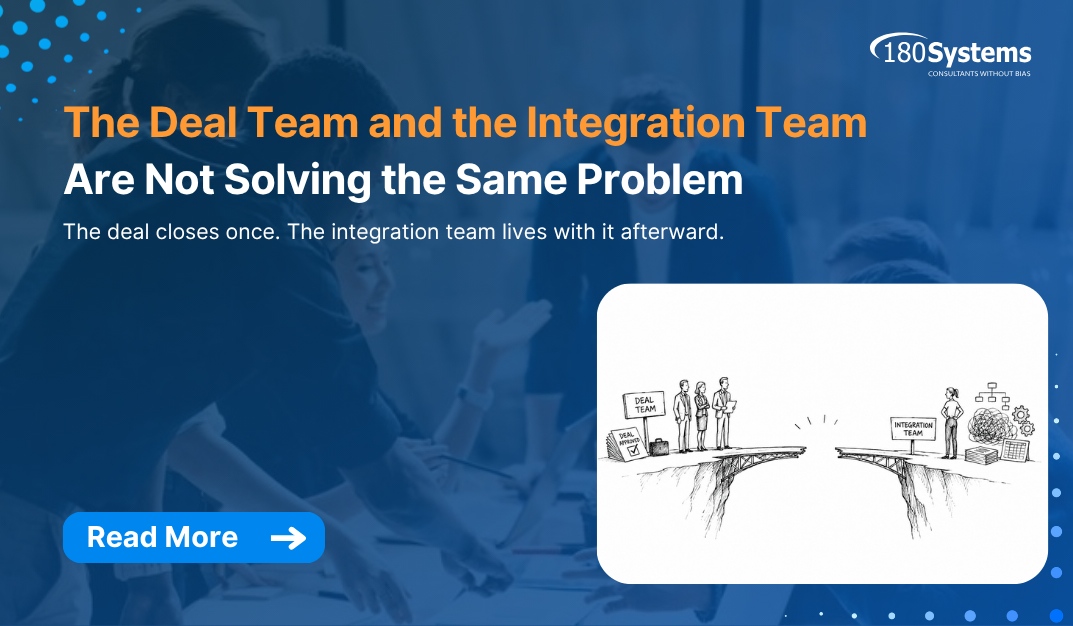
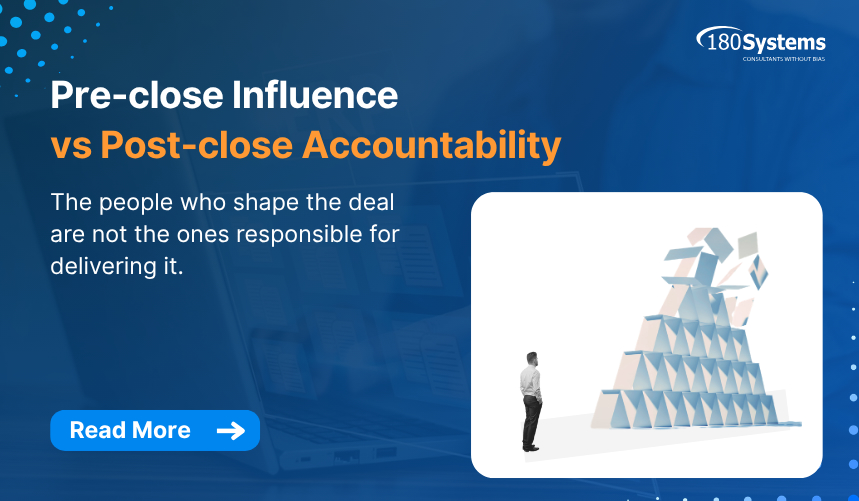
There’s a quiet structural flaw in how most M&A deals are done. It doesn’t show up in the model; it doesn’t sit in the risk register; and yet it’s one of the most reliable ways to lose value. The people who shape the deal are not the ones responsible for delivering it. By the time the operators arrive, the assumptions are already locked in, the commitments are already made, and the clock has already started. Take Cadbury. The narrative most people remember is emotional: a beloved brand, a hostile bidder, a defence mounted with conviction. The reality is far more […]
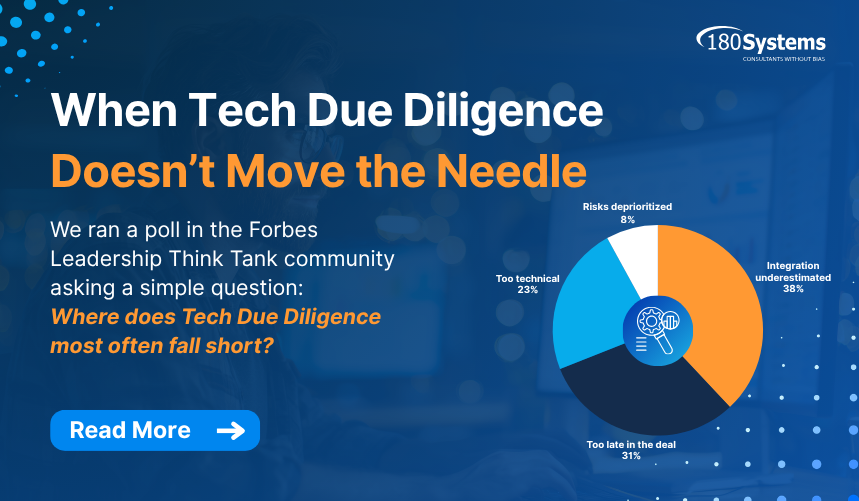
Most Technology Due Diligence reports are thorough. Painfully thorough. They catalogue systems, they map infrastructure, they inventory applications with the enthusiasm of someone counting grains of sand on a beach. And yet, after all that work, many of them do not actually change the deal decision. So, I ran a poll in the Forbes Leadership Think Tank community asking a simple question: Where does Tech Due Diligence most often fall short? Results were interesting… None of these surprised me, what surprised me was how evenly they reinforce the same underlying problem. Technology Due Diligence often answers the wrong question because […]
AI is having a moment in M&A advisory. Depending on who you ask, it is either quietly transforming how M&A advisory firms operate or about to replace half the diligence ecosystem. Both statements are wrong, but one sells better. The truth sits somewhere in the middle. AI is helpful in M&A. It is not decisive. And it certainly is not accountable. Right now, AI shows up best as an extremely fast, extremely literal intern inside the M&A advisory process. It reads everything. It flags patterns. It never gets tired. It also has absolutely no idea why something matters. That distinction […]
A green technology due diligence report does not mean low integration risk. In this short video, Amanda, Senior Consultant at 180 Systems, explains why stable systems do not guarantee stable dependencies – and why integration lives between teams, not platforms. [/vc_row] […]